

Natan Abramov
| Updated | 10 min read
The short answer
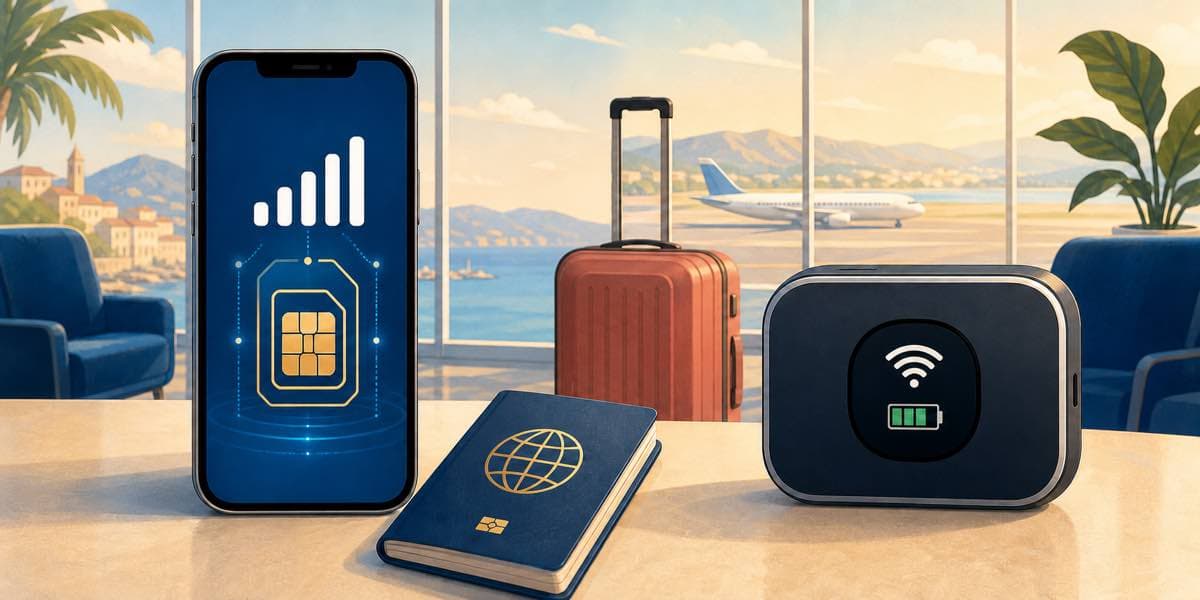
eSIM vs Pocket WiFi comes down to how many people and devices need data. An eSIM is usually the simpler choice for one traveler with a compatible, unlocked phone. There is no rental device to collect, carry, charge, or return. Pocket WiFi can make more sense when a group wants to share one connection, several devices need to stay online, or the phones on the trip do not support eSIM.
Neither option is automatically faster or cheaper. Both connect to a mobile network, so the plan, local network, coverage, congestion, and fair-use rules matter more than whether the connection comes through an eSIM or a small router.
The quick rule Choose an eSIM for independence and less equipment. Choose Pocket WiFi when sharing one connection matters more than carrying another device.
What is the difference between eSIM and Pocket WiFi?
An eSIM is a digital SIM installed directly on a compatible phone. Your phone connects to the mobile network itself, the same way it would with a physical SIM. You can keep your home SIM active for your normal number while using the travel eSIM for data, provided your phone supports dual SIM. Our plain-language eSIM guide explains the setup in more detail.
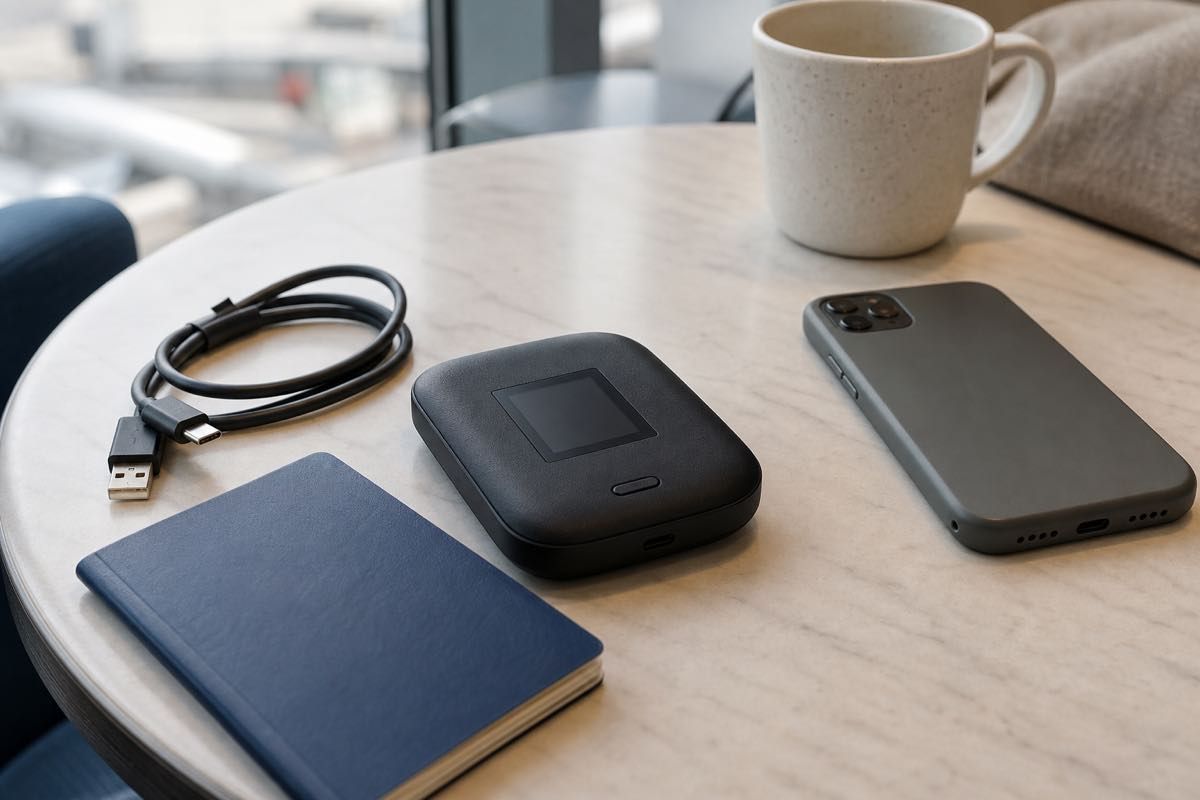
Pocket WiFi, also called portable WiFi or a mobile hotspot, is a separate battery-powered router. The router connects to a mobile network, then creates a private WiFi network for your phone, laptop, tablet, or travel companions. You usually rent it for the trip and collect it at an airport, hotel, shop, or by delivery.
For a buy-your-own example, the TP-Link M7350 is a typical 4G mobile WiFi router: you insert a SIM and it shares the connection with up to 10 WiFi devices. It is an example of the category, not a universal recommendation. Before buying any router, check its supported mobile bands, SIM requirements, battery life, and compatibility with networks at your destination.
| Question | eSIM | Pocket WiFi |
|---|---|---|
| What connects to the mobile network? | Your phone | A separate router |
| Extra device to carry | No | Yes |
| Setup | Install a digital SIM | Collect the router and join its WiFi network |
| Charging | Your phone only | Your phone and the router |
| Sharing | Use your phone's hotspot if the plan allows it | Built for several WiFi connections |
| Works with an older phone | Only if the phone supports eSIM | Yes, if the phone has WiFi |
| Group independence | Everyone needs their own plan or stays near the hotspot phone | Everyone must stay near the router |
| End-of-trip task | Turn off or remove the travel line | Return the router on time |
Which one costs less?
For one traveler, an eSIM often has the simpler cost structure: choose a data allowance and validity period, then pay once. Pocket WiFi is commonly priced by rental day and may also include delivery, airport pickup, insurance, a deposit, or late-return fees. The cheapest headline price is not always the final trip cost.
For a family or group, the calculation can reverse. One Pocket WiFi rental shared among several people may cost less than buying a separate eSIM for every phone. That saving only holds if the group stays together and one connection gives everyone enough data and speed.
Compare the full trip, not one gigabyte in isolation:
- Count every traveler and device that needs data.
- Check whether hotspot use is allowed and whether it has a separate limit.
- Compare fixed data with any daily fair-use threshold on an unlimited plan.
- Add rental delivery, insurance, deposits, and return costs.
- Decide what happens when the group separates for an afternoon.
If you are unsure how much data your phone, maps, video, and hotspot use will consume, estimate the trip with the travel data calculator before comparing prices.
Which option is easier during the trip?
An eSIM removes a piece of equipment from your packing list. You can buy and install it before departure, then select it as your data line when you arrive. There is no collection counter, return envelope, or rental deadline. Apple also notes that supported iPhones can keep a home line and a travel eSIM active together, which helps you keep your usual number while using travel data. See Apple's travel eSIM guidance for the current iPhone requirements.
Pocket WiFi has an easier setup for phones that cannot use an eSIM. Turn on the router, connect to the network printed on it, and enter the password. Everyone can join without changing SIM settings. The trade-off is coordination: the person carrying the router becomes the center of the group's connection.
That matters on ordinary travel days. If one person returns to the hotel while another stays out, only the person with the router keeps the shared connection. Separate eSIMs let each traveler navigate, message, order a ride, and change plans independently.
What happens to battery life?
Using an eSIM for data consumes the phone battery in the normal way. It does not add a second battery to manage. If the phone also shares its connection as a hotspot for a laptop or several people, battery use rises and a power bank becomes useful.
Pocket WiFi moves the hotspot work to a dedicated router, which can protect the phone from the extra drain caused by tethering. It does not remove the charging problem. You now need to keep the router charged as well as the phone, and the entire group loses its connection if the router runs flat.
For an all-day group hotspot A Pocket WiFi router can be the better battery setup. For one person using data directly on a phone, an eSIM is usually the lighter setup because there is only one device to charge.
Is Pocket WiFi better for families and groups?
Pocket WiFi is strongest when several people stay together and want one shared connection. It can also suit a family carrying tablets, a laptop, or a game console that will spend much of the trip in the same room, vehicle, or sightseeing group.
It is weaker when people split up. A child with a parent in another part of a theme park, two friends taking different trains, or a couple following separate plans cannot both take the router. One lost, forgotten, or empty device also disconnects everyone at once.
For two adults, separate eSIMs are often worth considering even when one Pocket WiFi rental looks cheaper. Each person keeps maps and messaging on their own phone, and either can call a ride or find the hotel without tracking down the router. For a larger group that stays together, the shared router becomes more compelling.

Does eSIM or Pocket WiFi have better coverage and speed?
The format does not decide coverage. Both options use a mobile carrier behind the scenes. A fast Pocket WiFi plan on a strong local network can outperform a weak eSIM plan, and a well-routed eSIM can outperform a congested router plan.
Check these details instead:
- Which local networks the plan can use.
- Whether 4G or 5G is available on your device and plan.
- Whether an unlimited plan slows down after a daily allowance.
- Whether hotspot use has a separate cap.
- Whether coverage includes every country on a multi-country trip.
The WiFi link between a Pocket WiFi router and your phone is only the last few meters. The router still needs cellular coverage. It does not create internet in a place where its mobile network has no signal.
What if you need data on a laptop or tablet?
Pocket WiFi is designed to connect WiFi devices, so it is convenient when a laptop, tablet, and phone need to stay online together. It also keeps the laptop connection running without turning your phone into the shared hotspot.
An eSIM can do the same job through phone tethering when the phone and plan allow it. Most Android phones can share mobile data over WiFi, Bluetooth, or USB, although Google advises checking whether your operator limits tethering. Its Android hotspot guide covers the available methods.
Before relying on either option for work, check the plan's hotspot rules and choose enough data for laptop use. Cloud backups, software updates, and video calls can use much more data than maps and messaging on a phone.
Is eSIM or Pocket WiFi better in Japan?
The same decision rules apply in Japan, but Pocket WiFi rentals are easy to find at major airports. Narita Airport lists rental counters across all three terminals. That makes the choice feel more balanced than it does in destinations where rental counters are less common.
Choose an eSIM for Japan if you are traveling alone or as a couple, have compatible unlocked phones, and want each person connected independently. You can install before departure and avoid building airport pickup and return times into the trip. Check your phone first with the eSIM compatibility checker, then compare the available Japan eSIM plans.
Choose Pocket WiFi if several people will stay together, you need to connect many WiFi-only devices, or one or more phones cannot install an eSIM. Confirm where you will collect and return it, how long its battery lasts, and what happens if a flight arrives after the counter closes.
Japan decision shortcut Solo traveler or couple with compatible phones: start with eSIM. Family or group sharing several devices: compare one Pocket WiFi rental against separate eSIMs, including pickup, return, and the cost of being separated.
How to choose in two minutes
| Your trip | Better starting point | Why |
|---|---|---|
| Solo traveler with a compatible phone | eSIM | No extra hardware and no rental return |
| Couple that may split up | One eSIM each | Both travelers keep maps and messaging |
| Family staying together | Pocket WiFi | One shared connection may be simpler and cheaper |
| Several laptops or WiFi-only devices | Pocket WiFi | Built to keep several devices connected |
| One phone and occasional laptop use | eSIM plus phone hotspot | Less equipment for light tethering |
| Older or carrier-locked phone | Pocket WiFi | The phone only needs working WiFi |
| Multi-country trip | Regional eSIM or regional Pocket WiFi plan | Coverage and fair-use terms decide the winner |
If eSIM looks like the better fit, confirm that the phone is compatible and unlocked before buying. Install it while you still have a reliable internet connection. The iPhone installation guide and Android installation guide show the exact steps.
If Pocket WiFi fits better, reserve it before a busy travel period, screenshot the pickup instructions, and set a return reminder before the final day. Check what the rental company charges for damage, loss, or a late return.
The practical conclusion
An eSIM is the better default for most solo travelers and couples because it keeps the trip simple and gives each traveler an independent connection. Pocket WiFi remains useful for groups that stay together, trips with many WiFi-only devices, and phones that cannot install an eSIM.
The right answer is not the option with the loudest speed or unlimited-data claim. It is the one that covers your route, gives you enough data, works with your devices, and still fits the way your group will move during the trip.
Frequently asked questions
Is eSIM better than Pocket WiFi?
An eSIM is usually better for one traveler or a couple with compatible unlocked phones because there is no extra device to carry, charge, collect, or return. Pocket WiFi can be better for a group sharing one connection or for phones without eSIM support.
Can an eSIM replace Pocket WiFi?
Yes for many trips. A phone with an eSIM can use data directly and share it with other devices through a personal hotspot if the phone and plan allow tethering. A dedicated router is still more convenient for several devices using the connection all day.
Can two people share one eSIM?
An eSIM installs on one phone, but that phone may share its data through a hotspot. Both people must stay close to the phone, and hotspot use can drain its battery faster. Separate eSIMs give each person an independent connection.
Does Pocket WiFi work without mobile coverage?
No. A Pocket WiFi router connects to a cellular network and then shares that connection over WiFi. If its mobile network has no signal, connecting your phone to the router will not provide internet.
Is Pocket WiFi or eSIM cheaper for a family?
Pocket WiFi may be cheaper when a family stays together and can share one rental. Separate eSIMs may be worth the extra cost when family members split up or each person needs reliable maps and messaging on their own phone.
Does eSIM use more battery than Pocket WiFi?
Using an eSIM for normal phone data does not require a second device. Sharing it as a hotspot increases phone battery use. Pocket WiFi moves that hotspot load to a router, but the router has its own battery that must stay charged.
Is eSIM or Pocket WiFi better for Japan?
An eSIM is usually simpler for solo travelers and couples with compatible phones. Pocket WiFi can suit families, larger groups, and trips with several WiFi-only devices. Include airport pickup, return logistics, and the possibility of the group separating when comparing the cost.