

Natan Abramov
| 14 min read
What is the best eSIM for Europe?
The best eSIM for Europe is a regional plan that covers every country on your route, the UK and Switzerland included, and costs a few dollars per GB rather than a few dollars per day. On October 19, 2026, a 30-day Europe plan with 10 GB cost between $15 and $35.99 across the six providers we checked. Pelesim and Ubigi had the lowest price at $15, and Pelesim's plan covers 41 countries including the UK, Switzerland and Turkey.
Pelesim publishes this blog, so every price below is dated and taken from each provider's own page for you to check. The price is the easy part, though. Most of what goes wrong on a European trip happens in the first hour: no signal at the airport, a WhatsApp code that never arrives, a taxi app that will not load, a museum ticket that will not open at the gate. Those get a section each further down.
The short version For a trip through two or more countries, buy one regional eSIM with about 1 GB per day of travel, install it at home, and keep your own SIM switched on with data roaming off. Your number, WhatsApp and bank codes keep working, and the eSIM handles the data.
How much does a Europe eSIM cost in 2026?
These are list prices in US dollars from each provider's own Europe page, checked on October 19, 2026. Read the table as a dated snapshot: travel eSIM prices change often, and providers that price in euros convert at their own rates.
| Provider | About 5 GB | About 10 GB | About 20 GB |
|---|---|---|---|
| Pelesim | $9.40 | $15 | $23 |
| Ubigi | 3 GB for $7 | $15 | 25 GB for $29 |
| Yesim | $11.52 | $19.20 | $26.40 |
| Nomad | $17.50 | $23 | $27 |
| Saily | $19.49 | $35.99 | Not sold |
| Airalo | $19.50 | $31 | $48 |
All six are 30-day plans. Yesim shows its prices as discounts from higher crossed-out ones, and Nomad's 20 GB price was marked as a sale; the table uses what each one charged on the day. Holafly sells only unlimited plans for Europe, so it is in the unlimited table further down.
At 10 GB the most expensive plan in the table costs more than twice the cheapest for the same 30 days. The price per GB matters more than the headline price, and so does the country list, which is the next section.
Pelesim's full Europe range runs from 1 GB for a week at $2.50 to 100 GB for 180 days at $159, and every size is on the Europe eSIM page.
For comparison, roaming on a US carrier costs by the day. AT&T's International Day Pass is $12 a day, so two weeks on it is $168 for one phone, against $23 for 20 GB over 30 days on a Europe eSIM.
Which countries does a Europe eSIM cover?
Every EU country, plus some of the places travellers forget are not in the EU, depending on the provider. Pelesim's Europe plans cover all 27 EU countries, the UK, Switzerland, Norway, Iceland, Liechtenstein, Turkey and Ukraine. The 41-country plans also cover Albania, Bosnia and Herzegovina, Georgia, Gibraltar, Montenegro, North Macedonia and Serbia.
The three countries that catch people out are the UK, Switzerland and Turkey, and the providers differ on all three:
| Provider | Countries | UK | Switzerland | Turkey |
|---|---|---|---|---|
| Pelesim | 41 | Yes | Yes | Yes |
| Airalo | 41 | Yes | Yes | Yes |
| Ubigi | 38 | Yes | Yes | No |
| Saily | 35 | Yes | Yes | Yes |
| Nomad | 35 | Yes | Yes | No |
| Holafly | 33 | Yes | Yes | No |
| Yesim | 33 | Yes | Yes | No |
Counts are from each provider's Europe page on October 19, 2026. Ubigi's is our count of its network table. Nomad also sells a 36-country plan we did not check.
For Pelesim's plans specifically:
| Question | Answer for Pelesim's Europe plans |
|---|---|
| Is the UK included? | Yes, on every Europe plan |
| Is Switzerland included? | Yes, on every Europe plan |
| Is Turkey included? | Yes, on every Europe plan |
| Monaco, Andorra or San Marino? | No. Monaco and Andorra have their own plans, and San Marino is not covered |
| Moldova or Kosovo? | No |
| The Balkans (Serbia, Montenegro, Albania)? | Only on the 41-country plans |
Check the country list before you buy, not after. A plan that skips one country on the route is the usual reason people end up buying a second eSIM mid-trip. If your route includes Monaco or Andorra, a small country plan for that day is cheaper than roaming on your home SIM.
Will you have signal when you land?
Yes, if the eSIM is installed before you fly. Install it at home on Wi-Fi a day or two before you leave. Pelesim plans do not start counting days until the eSIM first connects to a network in Europe, so installing early costs nothing. Other providers differ: Saily's Europe plan starts on its own after 180 days and Nomad's after 60 if you have not used it, so check that line before you buy.
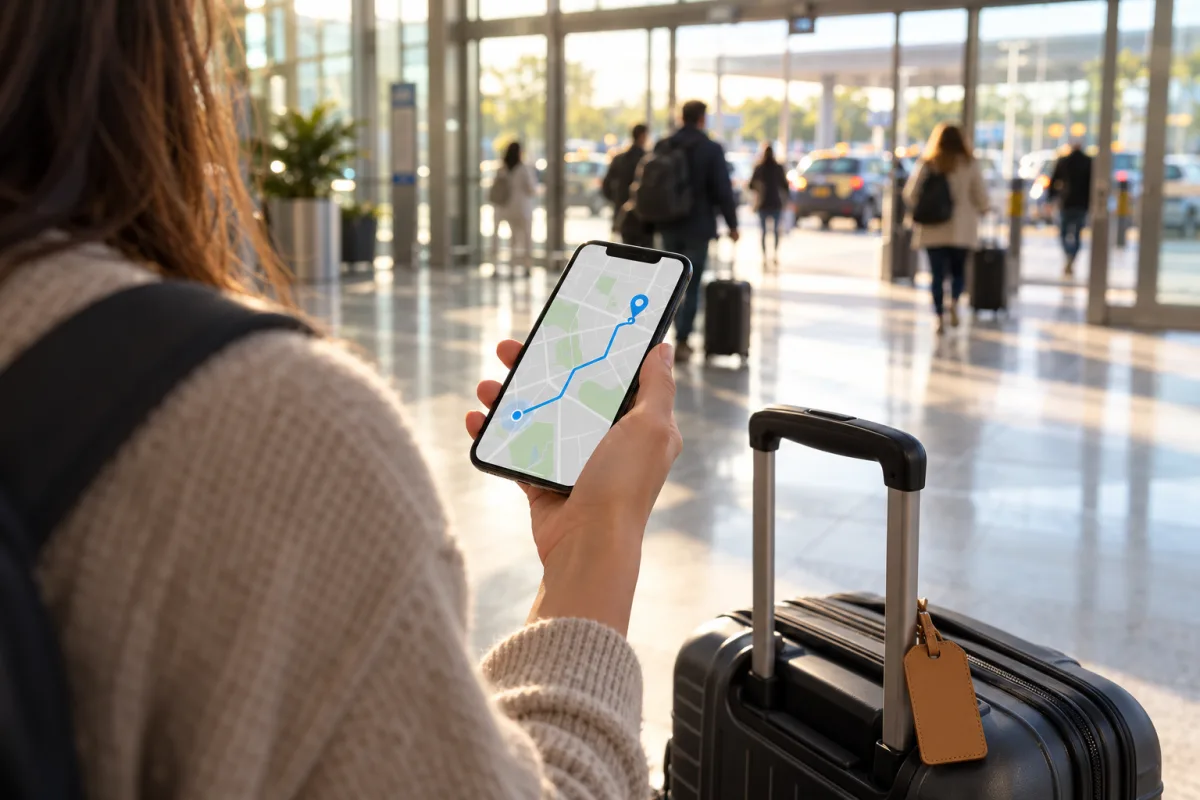
When the plane lands:
- Turn off airplane mode.
- Choose the Europe line for mobile data. On iPhone that is Settings > Cellular > Cellular Data, which some regions call Mobile Data. On Android it is Settings > Network & internet > SIMs.
- Turn on data roaming for the Europe line only. Leave it off on your home line.
- Give the phone a minute to find a network. If it shows signal but no data, restart it once.
If something does go wrong, airports in most European capitals have free Wi-Fi, which is enough to reach support, re-download an eSIM or message whoever is picking you up. Before you fly, also download offline maps for your first city in Google Maps or Apple Maps, and save your hotel address in a note. Then a slow first ten minutes is an inconvenience rather than a problem. The iPhone install guide shows each screen if you have not installed an eSIM before.
Will you keep your number and WhatsApp?
Yes. A travel eSIM adds a second line for data. Your own SIM stays in the phone, and your number stays yours.
WhatsApp is tied to your account and your phone number, not to whichever SIM carries the data. Once WhatsApp is set up on your phone, it works over any data connection, the Europe eSIM included, and people reach you on the same number as at home. The same goes for iMessage and FaceTime on an iPhone, as long as your home line stays switched on.
Three settings keep it that way without a roaming bill:
- Keep the home line on, with data roaming off. Texts still reach it, so bank and two-factor codes arrive as usual. On AT&T, the $12 International Day Pass starts the first time you use data, send a text, or make or accept a call, according to AT&T's Day Pass page. Receiving a text is not on that list. Check your own carrier's roaming page for the same rule.
- Do not reinstall WhatsApp or switch phones mid-trip. Re-registering sends a code to your home number by text or call, which is the moment people get stuck or pay for a call. Turn on WhatsApp's two-step verification PIN before you leave.
- Let missed calls go to voicemail. Answering a call on your home line abroad can start a roaming charge. Call back over WhatsApp or FaceTime instead.
Can you use Uber, Bolt and Google Maps?
Yes. All of them run over mobile data, so they work on any travel eSIM. Which ride app you need depends on the city: Uber operates in most large European cities, Bolt is common in Central and Eastern Europe and parts of the south, and FREENOW and local taxi apps cover others. Install the ones for your route at home.
The trap is the login, not the data. Ride apps and banking apps often ask a new or long-unused device to confirm by text, and that code goes to your home number. With the home line switched on, it arrives. Log in to each app once before you travel, so you are not doing it at a taxi rank.
Maps use less data than people expect. Navigating for an hour is usually a few dozen MB, and a map you downloaded offline uses almost none. Streaming music on the walk is what adds up.
How do you book restaurants and call ahead?
Most restaurant bookings in Europe happen online, through the restaurant's own site, Google Maps or TheFork, which is the largest booking app in France, Italy and Spain. They ask for a phone number. Give your own, with its country code: it receives the confirmation text, and a restaurant that needs to reach you will usually message on WhatsApp.
The gap is calling out. A data eSIM, ours included, carries data and no phone number, so it cannot ring a restaurant, a hotel's landline or an airline desk on its own. WhatsApp calls cover anyone who uses WhatsApp, which in much of southern Europe includes small businesses. For landlines, your home line works but costs whatever your carrier charges for a call abroad. CallTuv is a calling app made by the same company as Pelesim that calls mobiles and landlines over data, so if you use it, know that it is our own product rather than a neutral pick.
What about museum, train and attraction tickets?
Europe's big attractions have moved to online booking in timed slots, and the ticket is usually a QR code on your phone. That makes a working connection at the gate useful, and a screenshot essential.
| Attraction | Booking | Worth knowing |
|---|---|---|
| Louvre, Paris | Timed slots online | €32 for visitors from outside the EEA, €22 for EEA residents |
| Anne Frank House, Amsterdam | Online only | Not sold at the door. Released every Tuesday at 10:00 CEST for visits six weeks later |
| Sagrada Familia, Barcelona | Timed slots online | Book before the trip in high season |
| Vatican Museums, Rome | Timed slots online | Book on the official site to avoid reseller markups |
| Colosseum, Rome | Timed slots online | Use the official ticket office |
| Alhambra, Granada | Timed slots online | Palace entry has a fixed time |
Prices and rules are from each official site on October 19, 2026.
Gates scan the code from your screen, often in a queue where a dozen phones are looking for the same mast. Add the ticket to Apple Wallet or Google Wallet if the site offers it, or take a screenshot as soon as it arrives. Train tickets work the same way: Trainline, SNCF Connect and DB Navigator all show the ticket in the app, and the apps can usually display a saved ticket offline.
How much data do you need for a trip to Europe?
About 1 GB a day covers most travellers: 10 GB for a week and 20 GB for two. Our travel data calculator works with three profiles. Light use, about 0.4 GB a day, is maps, messages and some browsing. Everyday use, about 1 GB a day, adds social feeds, sending photos and short videos. Heavy use, about 3 GB a day, means video calls, streaming or a laptop on the phone's hotspot.
These are the totals it gives, with a 30% margin for slow days, app updates and background use:
| Trip length | Light use | Everyday use | Heavy use |
|---|---|---|---|
| 7 days | 4 GB | 10 GB | 28 GB |
| 10 days | 6 GB | 13 GB | 39 GB |
| 14 days | 8 GB | 19 GB | 55 GB |
Hotels across Europe almost all have Wi-Fi, so the real figure drops if photo backups and app updates wait for it. Most providers sell top-ups, and Pelesim's Europe plans can all be topped up, so buying for your expected use and adding more if you run low is cheaper than paying up front for your worst case.
Regional plan or one plan per country?
For one country, a country plan is cheaper. For two or more, the regional plan usually wins on price and always wins on hassle. On October 19, 2026, Pelesim's 5 GB for 30 days cost $5 to $6 in single countries such as Spain, France, Germany, Switzerland and the UK, against $9.40 for the Europe plan. Two country plans already cost more than one Europe plan, and you install one eSIM instead of several.
| Your trip | A sensible starting point |
|---|---|
| A week in one city, say Paris or Rome | A country plan, 5 to 10 GB |
| Paris, then Amsterdam by train | A Europe plan, 10 GB |
| Two weeks, three or four countries | A Europe plan, 20 GB |
| London plus the continent | A Europe plan, which includes the UK |
| A Christmas market trip through Germany, Austria and Czechia | A Europe plan sized to the days, see our Christmas markets guide for routes |
| The Balkans or Georgia on the same trip | One of the 41-country Europe plans |
| A cruise | A plan for the ports, and data roaming off on board, where the ship's network is not covered by EU rules |
For a week in Greece specifically, our Greece eSIM guide compares country plans and the Greek networks.
Are unlimited Europe plans worth it?
Only if you would use more than about 2 GB a day, and only after you read where the plan slows down. "Unlimited" plans in Europe all have a point where speed drops.
| Provider, 7 days | Price | Full speed before it slows |
|---|---|---|
| Pelesim | $23 | 5 GB a day, then 1 Mbps |
| Ubigi | $23 | 25 GB in total, then 2 Mbps |
| Saily | $26.99 | 5 GB a day, then up to 1 Mbps |
| Airalo | $27 | 5 GB a day, then 1 Mbps |
| Holafly | $27.50 | No number given; operators may slow it for up to a day |
| Yesim | $29.40 | No number given; the operator's fair use policy applies |
| Nomad | $34 for 10 days | 2 GB a day, then 1 Mbps |
Prices from each provider's Europe page on October 19, 2026. Nomad has no 7-day unlimited plan for Europe, so its row is the 10-day price. Pelesim's 5 GB a day plan is $40 for 15 days and $52 for 30. See how unlimited eSIMs work for what fair use means in practice.
For most trips a fixed plan of the right size is cheaper. Unlimited earns its price for heavy streaming, long video calls or a working day on hotspot. Check the hotspot rule too: Holafly allows 1 GB a day of sharing, Saily says sharing is unlimited, and Nomad and Ubigi say it is allowed.
What changes and what does not?
Prices change, and the tables above are a snapshot from October 19, 2026. So do country lists, which is the detail most comparisons skip. Check both on the day you buy.
What does not change is how the trip goes. Install the eSIM at home, keep your own line switched on with roaming off, log in to your apps before you fly, and save your tickets offline. The connection then stops being something you think about.
Frequently asked questions
What is the best eSIM for Europe and the UK?
A regional plan that lists the UK. Pelesim's Europe plans include the UK and Switzerland, with 5 GB for 30 days at $9.40 on October 19, 2026. Some providers sell a Europe plan without the UK, or put it on a separate, pricier plan, so check the country list before buying.
Does WhatsApp work with a travel eSIM?
Yes. WhatsApp runs over any data connection and keeps your usual number, because the account is tied to your number rather than to the SIM carrying the data. Keep your home line switched on so that a verification code can reach it if WhatsApp ever asks for one.
Will I get a European phone number with an eSIM?
Not with most travel eSIMs, Pelesim's included: they are data only. Your own number stays on your phone's other line for texts, and you can call over WhatsApp, FaceTime or a calling app.
Can I use one eSIM in several European countries?
Yes. A regional Europe eSIM switches to a local partner network as you cross a border, with no setup. You may see a short drop in signal at the border while the phone changes network.
When does a Europe eSIM start?
It depends on the provider. Pelesim plans start when the eSIM first connects to a network in a covered country, so you can install a week early. Some providers start at install or after a set number of days, which can eat into a trip before it begins.
Is 10 GB enough for two weeks in Europe?
For light use, yes: maps, messages and browsing take about 0.4 GB a day. With social media, photos and short videos most people use about 1 GB a day, which is closer to 20 GB for two weeks. Hotel Wi-Fi for backups and updates stretches either one.
Does a Europe eSIM work on a cruise or ferry?
In port and near the coast it usually does. Out at sea, ships often run their own network over satellite, which is outside EU roaming rules and is not one of the networks a travel eSIM uses. Keep data roaming off on your home SIM on board, and use the ship's Wi-Fi if you need to be online at sea.
Do I need an eSIM if I live in the EU?
Usually not for a trip inside the EU. Under the EU's Roam Like at Home rules, extended to 2032, an EU or EEA SIM uses its home allowance in other EU countries. The rules stop at the EU's borders, so an eSIM still helps EU residents in the UK, Switzerland or Turkey, at sea, or when the home plan's roaming data allowance is small.